Monday, June 15, 2020

Astrology and Current Events

Mountain Astrologer magazine is one of the most respected publications/websites for serious students of astrology -- Richard Tarnas (see Experience 3, Discussion Board for June 8 &10) mentions it in his interview, and one of the links below mentions him.
The Mountain Astrologer blog post for June 10, "George Floyd & Our Social Unrest," talks about racism, the near absence of astrologers of color, and the unacceptability of making astrological "predictions" after the fact.
While it would be easy to try to define this social unrest through astrology (after the fact, as usual), the cause — racial prejudice — has been a part of the foundation of America from the beginning. Perhaps both the pandemic and the social unrest are events that are preparing the world for the social, humanitarian changes that we astrologers assume will be a part of Pluto’s upcoming transit through Aquarius.
Several other posts over the past couple of months discuss correlations between celestial phenomena and current events.
  • Reflections on Coronavirus and the Saturn-Pluto Conjunction
  • Thoughts about the days we are in.... discusses the current positions of generational planets (Jupiter, Saturn, Uranus, Neptune, Pluto) in relation to the horoscopes of the Centers for Disease Control and the World Health Organization, and throws in a fascinating curveball related to Hygeia, the fourth-largest asteroid in the solar system, also known as the "minor planet," 10 Hygeia. This minor planet/asteroid takes 5-1/2 Earth years to orbit the sun. If "Hygeia" sounds like "hygiene," as in, oh, I don't know -- handwashing -- you're on the right track
  • There are two posts by Australian astrologer Brian Clark that have more to do with archetypal psychology, maybe, than astrology, but, if you let them, can really expand your field of vision about the moment we are living. 
    The first is "At Home With Hestia: a return to center," and gives a nod to the asteroid Vesta (the Latin name for the goddess Hestia), which is the brightest asteroid in our solar system and takes 3.63 Earth years to circle the Sun. 
    The second is "Pan and the Pandemic: Love in the Time of Capricorn." This one traces the genealogy of the Greek god Pan to his roots in Sumerian myth -- the names and symbols we use for the astrological constellations derive from the traditions of this 7000-year-old civilization. And of course, medieval depictions of the Devil borrow heavily from characterizations of Pan and Capricorn.
Richard Tarnas's book is called Cosmos & Psyche: Intimations of a New World View. It is a masterful exploration of cultural and historical cycles going back at least 2000 years.
I mentioned "generational planets" above. What does that mean? The farther out from the Sun a planet is, the longer it takes to complete a trip through the Zodiac. In astrology, the Sun, Moon, Mercury, Venus, and Mars are considered "personal planet" which relate directly to a person's character. The other planets are related to longer cycles that have demographic significance. Here are all the "planets" with their orbital lengths expressed in Earth time.
  • Sun - 365 days
  • Moon - 28 days
  • Mercury - 88 days
  • Venus - 225 days
  • Mars - 1 year, 320 days
  • Jupiter - 12 years
  • Saturn - 29 years
  • Uranus - 84 years
  • Neptune - 165 years
  • Pluto - 250 years

Tuesday, February 25, 2020

FREDDIE the Golden Doodle Grand Dog

This is Freddie Pup, my daughter's six month old golden doodle. Because he's my daughters, that means he's my "grand dog." He's a pretty great guy. I've had several dogs in my life, and this guy is rapidly climbing to the top of the hit parade. I like that he frequently chills out. He's also a pretty good retriever, which is a good trait in a dog, I think.


This is me when I was 25 or 26 and living in Greenwich Village, New York. My dog, Daphne, was the greatest of all time. Being a Samoyed Huskey, she loved the snow. You may recall a photo of her and my in my Job Description post: bartender in Vermont. That's the same daughter who Freddie belongs to.

Finally, this is me and my wife, Julie, with my friend Ted the Brewing Painter's dog, Stella, in Sonoma County. When I first met Ted, in 2009, he'd just lost a rottweiler named Mugsy and couldn't stop crying. I was the same way with Daphne when we had to say goodbye. So, Ted and I bonded instantly.

A couple of years later, Julie and I went wilderness camping with Ted and his squeeze, Katherine, whom Julie has known since she was 5 years old. They grew up together in Key Biscayne, Florida, when it was wild -- and so were they. Anyway, during that camping trip Stella was about as old as Freddy Pup, and demonstrated that we belonged to her by peeing in our tent. Ah, memories.....


Tuesday, February 11, 2020

Books that Push Limits

Today I'm going to talk about two books which are equally transgressive, but each in its own way:

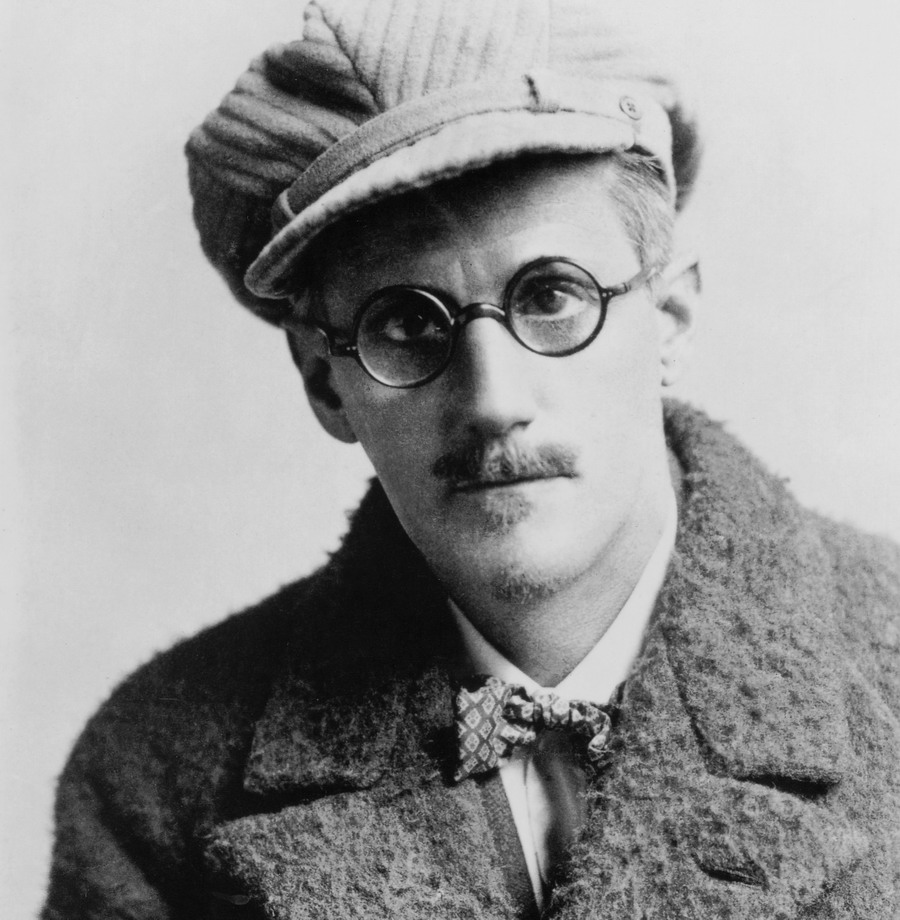
  • Ulysses by James Joyce, originally published in 1922
  • Celestial Bodies by Jokha Alharthi, originally published in 2010 in Arabic; English translation published in 2019.
My History with Ulysses
In college I started working on my first novel, which was based on a section of The Odyssey by Homer. A friend told me I absolutely had to sign up for an independent study with a professor who guided students through their first novels. We'll call him Professor Boylan.

One of the first things Professor Boylan told me was, "You know, a modern re-telling of the Odyssey has already been done."

"It has?" I blinked. You see, I thought I was a creative genius and no one had ever had this idea before.

"Yes," Boylan replied, "James Joyce. It's called Ulysses. You should get a copy and read it."

Long story short: I eventually got a copy. I couldn't get past Page 100 before I threw it against the wall in disgust. It was i-n-c-o-m-p-r-e-h-e-n-s-i-b-l-e. The Vintage/Random House version I read, published in 1961, was 783 pages. So I didn't get very far.

A few years later I was part of a group of writers working on novels. They let me be a part of the group when I told them my novel was an attempt to shed light on the seven years that Odysseus spent on an island with the immortal sea nymph Calypso. Those years are left out of The Odyssey

Genius that I thought I was, I set my novel on an island in the Caribbean and learned as much about calypso music as I could. Wikipedia has a nice article on calypso music. My favorite Calypso song, by the way, is "The Creature from the Black Lagoon."

One of these writers encouraged me to give Ulysses another try. I did. Sure enough, at Page 100, against the wall the now bruised and battered book went.

Later in life I heard that James Joyce had to get some friends to "leak" his structural scaffolding for the novel, which is quite intricate and -- dare I repeat myself? Incomprehensible.

Now, whenever I say his name out loud, there is an adjective in front of it -- beginning with an "f" and ending with "-ing...." The adjective is as obscene as many censors thought Joyce's book was -- it wasn't printed in his native Ireland until the 1960s, and was the subject of a lengthy obscenity trial in the United States that kept it off the shelves for 14 years. 

Recently, I was perusing audiobooks and came across Ulysses. "What the heck!" I said to myself, "It's been at least 30 years." I'm happy to say that, so far, I've made it past Page 300. The reader, whose name is John Lee, IS a genius. He's got a great Irish accent, and while I still don't understand much, I'm enjoying the flow of Joyce's language. 

My biggest takeaway from the book, so far, is that it does a brilliant job at capturing a particular man's internal monologue -- good bad and ugly. What goes on in this man's mind is, in fact, obscene at times.

Celestial Bodies
Jokha Alharthi portraitI'll admit that I had to take a break from Ulysses, and so I chose to listen to Celestial Bodies because it had won the very prestigious Man Booker International Prize in 2019. The author, Jokha Alharthi, is the first Omani woman to have a book translated into English, and Celestial Bodies is the first book translated from the Arabic to win the Booker prize.

My biggest takeaway is that Alharthi does a brilliant job of letting the reader into the private lives and thoughts of Muslim women -- in Oman, at least. And in that sense, half the Arab world must want to censor the bejesus out of it, just as half the English-speaking world censored Ulysses.


Thursday, January 23, 2020

Venus & the New Moon

Updated January 24, 2020


This was the photo I took from a friend's balcony in Tiburon, California on the last day of 2016. I don't know why the moon never comes out right in the photos I take, but it was a two or three-day old crescent moon, and the planet Venus -- sometimes the Evening Star, sometimes the Morning Star -- was up to its left. Outside the frame of the photo, a little above Venus, is Mars. Soon the two of them will have a close encounter of a very planetary kind!

If you're interested in what goes on above you at night, you might want to check out Sky and Telescope's "Sky at a Glance" blog. THIS WEEK'S covers January 6-14.

Moon and Venus in twilight, Jan. 26-28, 2020
If you're interested in what the dance in the night sky has to do with your personal life, you might want to check out Chani Nicholas's Horoscope Blog. THIS WEEK'S starts on January 24.

Thursday, September 13, 2018

USC Marshall Case Team Places 2nd in Singapore

September 3-9, 2018. National University of Singapore (NUS). USC Marshall's Case Team took second place out of 20 international business schools. Big deal! Plus, team member Caitlyn Huang took home Best Female Presenter! I'm humbled and proud.
Image courtesy of  National University of Singapore

Left to right: Alwin Ong Wei Ren (NUS ambassador), Brandon Kay '21, James Yun '19, Jiaxin "Claire" Lin '19, Caitlyn Huang '20, and me, Professor Hansen


Space Alien Calligraphy at
Singapore Chinese Cultural Center
This year's competition was broken into three parts:

  • A five-hour case on the Chinese Cultural Center in Singapore, worth 30% of the final score. 
  • A 24-hour case on the Bank of China's Singapore Branch, worth 70% of the final score 
  • Presentation by five finalists 

Each team was placed by a random drawing into one of five brackets consisting of four teams each.

USC's bracket included University of Aukland, UPenn's Wharton School, and Corvinus University Business School in Budapest. USC's initial goal was to beat Wharton. Corvinus scored #1 in the five-hour case, Wharton 2nd, Aukland 3rd, and USC dead last.

We were all seriously depressed.

The day after the five-hour case was dedicated to "The Amazing Race," a kind of social media scavenger hunt that took teams all over Singapore to complete and post about various tasks. I never did figure out where all this posting was taking place. My students muttered "Instagram, professor. Don't worry, we'll share the photos and videos with you on Google Drive."

Social media challenge: "Take a picture in a Singapore back alley."
Note that even the alleys in Singapore are spotless!
Ambassador Alwin kept the team on the Amazing Race track, but then, as we all commiserated and bonded, we decided to stick together late into the evening and Alwin shared some of his favorite Singapore Spots with us, including Jumbo Seafood and the light show at Gardens by the Bay.

Alwin kept Team USC on track with a visit to a
Hawker Center in "Olde Towne" Singapore
I was the only one who had seen all four case presentations, so I shared some observations with my team and they ran with them, not only beating Wharton in the 24-hour case, but scoring first (this time Aukland was second, Wharton third, and Corvinus last), thus securing a berth in the finals.

USC Marshall as "YRN Consulting" in the Finals. Judges are introduced,
and USC starts its presentation at 4:21:30.

The judges for the finals are extremely tough, and include this notorious NUS faculty member Andrew Delios (right), who starts contradicting you and questioning you after you say, "Well, I --"... USC were not rattled and ultimately placed second of the five finalist teams.

One last thing: while the teams have many opportunities to get to know one another (ours became particular friends with the Berkeley and New South Wales teams), the advisors end up having a lot of fun together.


Here's a last photo from the gala final dinner featuring just some of advisors and my new pals: Clockwise around the table, starting on the left: Marielle Nilsen from BI Norwegian Business School, Jen Laurette from Queen's University, Smith School of Business, Keith Niedermeier from Wharton, Brian Burfitt from New South Wales, Chua Lily (doyenne of the NUS Case Competition and hostess with the mostest), Geok Teng Lau (case writer, retiring force behind the NUS competition and husband of Lily), me, Pieter Verhallen from Maastricht University in the Netherlands, Rene Gendreau from HEC Montreal, Miklos Kozma from Corvinus in Budapest, Ingrid Larkin from Queensland University, and Erika Walker from Berkeley.


Most of the advisors joined their students at mega international dance club Zouk afterwards, but what happens at Zouk stays at Zouk, so I'm not at liberty to divulge any details, except to say that one of the challenges of being an advisor involves students, stress, alcohol, and catching early plane flights....

Monday, September 10, 2018

Ethics Video

Professor Hansen reads from H.H. Dalai Lama's Ethics for the New Millennium

Wednesday, February 7, 2018

Documenting Your Sources

The Mirror of Relationships

Libby was already seated by the time Carl arrived at the table. He was escorted by a waiter, dressed in black pants and white shirt, who had appeared, literally, out of nowhere. The waiter pulled out the chair opposite Libby and waited for Carl to sit down before offering him something to drink. Having been in Heaven only a year, Carl wasn’t used to the “no caffeine” rule and asked for a cup of coffee. He was politely denied. The waiter suggested that Carl try Heaven’s Special Drink, the ingredients of which were kept secret, but made everyone happier. “It’s marvelous,” Libby said enthusiastically, noticing Carl’s hesitation. “He’ll have one and I’ll take a refill,” she said to the waiter who glided away, his feet barely touching the ground.

What are relationships for? Most people might say that relationships are for having a companion to share interests and activities, a partner to raise a family, a mate for sharing expenses, etc. While those are certainly legitimate reasons for forming relationships, there is another level that goes on concurrently and most often unconsciously. A deeper reason we are drawn into relationships is to expand our sense of self and become more whole, integrated human beings. (Austen)


WORKS CITED

Austin, Stephanie. “Synastry: The Mirror of Relationship” from www.ecoastrology.com

Isackson, Peter. "The Daily Devil's Dictionary: Donald Trump and Respect." February 6, 2018 https://www.fairobserver.com/region/north_america/donald-trump-african-union-letter-us-politics-news-34958/?utm_source=newsletter&utm_medium=email&utm_campaign=February+7%2C+2018

Hovanetz, Michelle.  "Employment and Recruiting Agencies in California." October 2017
http://clients1.ibisworld.com.libproxy1.usc.edu/reports/us/industry/majorcompanies.aspx?entid=11163&collection=b111fa5b-0400-49d4-abbc-a0466a7d134d